Why Balance Training Is the Missing Link in Your Health Routine
You walk, you strength-train, maybe even stretch—but are you truly building resilience? I realized I wasn’t until a minor slip on wet pavement nearly sent me sprawling. That wake-up call led me to balance training, a quietly powerful pillar of health management often overlooked. It’s not just for athletes or older adults; it’s for anyone who wants to move with confidence, prevent injuries, and stay strong as life demands change. This is what I’ve learned on my journey—tested, real, and worth sharing.
The Hidden Weakness: Why Modern Lifestyles Sabotage Balance
In today’s world, sitting has become the default posture. Many spend hours at a desk, commute in cars, and unwind on couches—movement is minimal, and when it does occur, it often follows repetitive patterns like walking on flat surfaces or climbing stairs. While these activities maintain basic function, they do little to challenge the body’s ability to stabilize itself in unpredictable environments. Over time, this lack of varied sensory input weakens proprioception—the body’s internal GPS that tells us where our limbs are in space. Without regular stimulation, the neural pathways responsible for coordination and equilibrium grow less responsive.
The decline in balance is gradual and often unnoticed until a misstep reveals it. A stumble on uneven ground, a near-fall on slippery steps, or difficulty standing on one leg while putting on pants—these are not just embarrassing moments. They are signs of a deeper shift: the body losing its natural agility. Research shows that even by middle age, adults can experience measurable reductions in postural control, especially if physical activity lacks dynamic components. This deterioration increases the risk of falls, which remain a leading cause of injury-related hospitalizations, particularly among those over 50.
Poor balance also affects daily efficiency. When the body struggles to stabilize, movements become inefficient. Simple tasks like reaching for a high shelf or turning quickly may require extra effort or result in awkward postures that strain joints. Over time, this contributes to chronic discomfort, particularly in the lower back and knees. The irony is that while people invest in cardio and strength training to stay healthy, they often overlook the very system that supports all movement: stability. Without attention to balance, even strong muscles cannot fully protect the body from injury or fatigue.
Additionally, modern footwear and environments contribute to the problem. Thick-soled shoes reduce foot sensitivity, limiting feedback from the ground. Smooth floors and paved paths eliminate the natural instability that once helped develop coordination. Children who grow up in overly structured play environments may miss critical developmental windows for balance mastery. As a result, many adults enter midlife without having built the neuromuscular resilience needed for lifelong mobility. Recognizing this hidden deficit is the first step toward reclaiming control over how we move through the world.
Beyond Standing on One Leg: What Balance Training Really Is
Balancing on one foot may be the most visible form of balance training, but it represents only a fraction of what this practice entails. True balance training is a dynamic process that integrates multiple systems: the musculoskeletal system, the vestibular system in the inner ear, and the visual system. It’s not merely about holding still—it’s about maintaining control during movement, adapting to shifts in weight, and responding to external disturbances. This type of training enhances functional stability, allowing the body to move safely and efficiently in real-world conditions.
There are two primary types of balance: static and dynamic. Static balance refers to the ability to maintain equilibrium while stationary, such as standing on one leg or holding a yoga pose. Dynamic balance, on the other hand, involves stability while in motion—walking on a narrow path, stepping off a curb, or changing direction quickly. Both are essential, but dynamic balance is more closely linked to injury prevention and daily functionality. Most falls occur during movement, not while standing still, which makes dynamic training particularly valuable.
Effective balance training engages the core muscles, improves joint awareness, and sharpens motor coordination. It challenges the nervous system to process sensory input faster and respond with precision. For example, standing on an unstable surface like a foam pad forces the feet, ankles, and legs to make constant micro-adjustments. Closing the eyes during a balance exercise removes visual input, increasing reliance on proprioception and the vestibular system. These challenges stimulate neuroplasticity—the brain’s ability to adapt and form new neural connections—strengthening the mind-body connection over time.
Unlike isolated strength exercises, balance training is inherently functional. It mirrors the unpredictable nature of real-life movement, preparing the body for unexpected shifts in terrain or posture. Whether stepping off a bus, navigating a crowded room, or lifting a heavy object, good balance ensures that the body can adapt without losing control. It’s not a trend or a niche workout—it’s a scientifically supported component of long-term health management, recommended by physical therapists, sports medicine professionals, and rehabilitation experts worldwide.
Why It Matters: The Overlooked Benefits Backed by Science
The benefits of balance training extend far beyond preventing falls. Numerous studies have demonstrated its positive impact on joint stability, injury reduction, and overall physical performance. A 2021 meta-analysis published in the Journal of Sports Science & Medicine found that individuals who incorporated balance exercises into their routines experienced up to a 36% reduction in ankle sprains and other lower-limb injuries. This is particularly significant for active adults and weekend athletes, who may push their bodies without adequate protective mechanisms in place.
Beyond injury prevention, balance training supports long-term joint health. By improving neuromuscular control, it helps distribute forces more evenly across joints during movement. This reduces wear and tear on the knees, hips, and spine, potentially delaying the onset of osteoarthritis and other degenerative conditions. For those already managing joint discomfort, balance work can alleviate symptoms by promoting better alignment and reducing compensatory movements that lead to strain.
Emerging research also highlights the connection between balance and brain health. The cerebellum, responsible for motor control and coordination, remains highly active during balance tasks. Regular engagement of this brain region supports cognitive function and may contribute to healthier aging. A study from the University of Illinois showed that older adults who practiced balance exercises over six months demonstrated improved executive function and processing speed compared to a control group. Scientists believe this is due to enhanced sensorimotor integration—the brain’s ability to process and respond to sensory input quickly and accurately.
Another often-overlooked benefit is improved posture and reduced lower back pain. Poor balance often correlates with weak core muscles and improper weight distribution, leading to slouching or excessive arching of the spine. Balance training strengthens the deep stabilizing muscles of the abdomen, pelvis, and lower back, promoting a more upright and aligned posture. In clinical settings, patients with chronic lower back pain frequently see symptom improvement after integrating balance-focused rehabilitation into their care plans. These outcomes are not miraculous—they are the result of consistent, science-based practice.
Who Needs It? Debunking the “Only for Seniors” Myth
One of the most persistent misconceptions about balance training is that it’s only for older adults or those recovering from injury. While it is indeed crucial for seniors—helping reduce fall risk and maintain independence—it is equally important for younger and middle-aged individuals. In fact, starting balance work earlier in life builds a stronger foundation for healthy aging. Waiting until balance declines means playing catch-up rather than staying ahead of the curve.
Young athletes, for instance, can significantly enhance performance through balance training. Sports that require quick direction changes, jumping, or landing—such as tennis, basketball, or soccer—demand excellent dynamic stability. Studies show that athletes who include balance drills in their training experience improved agility, faster reaction times, and fewer non-contact injuries. Even runners benefit; better balance leads to more efficient stride patterns and reduced risk of overuse injuries like shin splints or plantar fasciitis.
For office workers and others with sedentary jobs, balance training counteracts the stiffness and postural imbalances caused by prolonged sitting. Simply standing on one leg while brushing teeth or doing heel-to-toe walks during phone calls can reactivate dormant neural pathways. These small efforts accumulate, improving circulation, joint mobility, and body awareness. Over time, this translates to greater ease in daily activities and a reduced likelihood of developing chronic discomfort.
Workplace safety is another area where balance plays a role. Employees in physically demanding roles—such as healthcare workers, retail staff, or warehouse operators—are at higher risk of slips, trips, and falls. Training programs that include balance components have been shown to reduce workplace injury rates. Even in low-risk environments, better balance contributes to overall physical resilience, helping the body handle unexpected movements or loads without strain. Balance is not a specialty skill—it’s a fundamental human capacity that everyone can and should maintain.
Simple Starts: Building a Realistic Routine at Home
The beauty of balance training lies in its accessibility. It requires no special equipment, gym membership, or large amount of time. Beginners can start with just a few minutes a day, using everyday spaces like a living room or kitchen. The key is consistency, not intensity. Like any skill, balance improves with regular practice, and small, sustainable habits are more effective than occasional, intense sessions.
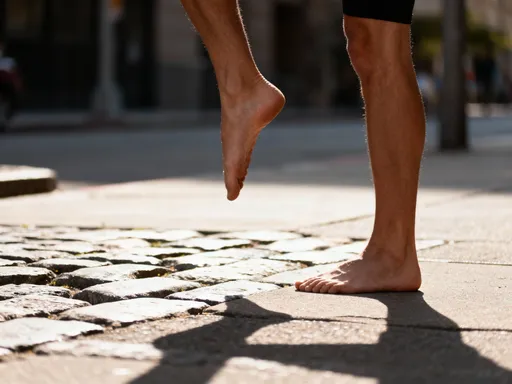
A good starting point is the heel-to-toe walk, also known as the tandem walk. This involves walking in a straight line with the heel of one foot touching the toes of the other, as if on a tightrope. It challenges dynamic balance and can be done along a hallway or against a wall for safety. Another beginner-friendly exercise is the single-leg stand. Simply lift one foot off the ground and hold the position for 20 to 30 seconds, then switch sides. Using a wall or chair for light support is perfectly acceptable—focus on form and control, not duration.
For those new to the practice, aiming for three to four sessions per week is realistic. Each session can last five to ten minutes, especially in the beginning. As confidence grows, individuals can increase the duration or reduce reliance on support. Adding simple progressions—such as closing the eyes during a single-leg stand or performing the heel-to-toe walk without holding onto anything—gradually increases difficulty in a safe way.
Another effective beginner move is the weight shift. Standing with feet shoulder-width apart, slowly shift weight onto the right foot, lifting the left foot slightly off the ground, then reverse. This helps develop awareness of weight distribution and strengthens ankle stabilizers. All of these exercises can be integrated into daily routines—while waiting for the kettle to boil, during TV commercials, or as part of a morning stretch. The goal is to make balance training a natural part of life, not an added burden.
Level Up: Integrating Dynamic Movements and Functional Challenges
Once foundational balance skills are established, individuals can progress to more advanced exercises that challenge the nervous system and improve adaptability. These intermediate movements introduce instability, movement in multiple planes, and reduced sensory input—all of which prepare the body for real-world demands. The focus remains on control, alignment, and safety, not speed or complexity.
Lunges with rotation are an excellent progression. From a standing position, step forward into a lunge while gently rotating the torso toward the front leg. This combines lower-body strength with core engagement and dynamic balance. It mimics functional movements like reaching for an object while stepping forward, making it highly practical. Proper form is essential: the front knee should stay aligned over the ankle, and the back knee should hover just above the ground. Performing two sets of eight to ten reps per side provides a meaningful challenge.
Using unstable surfaces adds another layer of difficulty. Standing on a foam pad, folded towel, or balance disc forces constant micro-adjustments in the feet and ankles. This heightened demand improves joint awareness and strengthens small stabilizing muscles often neglected in traditional workouts. For added challenge, try performing single-leg stands or weight shifts on the unstable surface. Even standing with feet together and eyes closed on a firm surface increases difficulty by removing visual cues.
Another effective drill is the single-leg reach. From a single-leg stance, slowly reach the opposite hand toward the floor in front, to the side, or behind the body, keeping the torso upright. This movement challenges balance in multiple directions and enhances hip and core control. It also improves coordination between upper and lower body—critical for activities like lifting groceries or bending to pick something up. As with all advanced exercises, it’s important to perform them in a clear, safe space and have support nearby if needed.
Making It Stick: How to Weave Balance Into Daily Health Management
The long-term success of balance training depends not on perfection, but on integration. Like brushing your teeth or drinking water, it becomes most effective when it’s part of a daily routine. The concept of habit stacking—pairing a new behavior with an existing one—can be especially helpful. For example, standing on one leg while brushing your teeth, doing a few weight shifts while waiting for your coffee to brew, or practicing a tandem walk after hanging up a phone call. These small actions build awareness and consistency without requiring extra time.
Tracking progress can also boost motivation. While balance improvements may not show on a scale, they are felt in everyday life. Noticing that you no longer grab the railing on stairs, that you can step off a curb without wobbling, or that you feel steadier when carrying heavy bags—these are real wins. Keeping a simple journal or mental note of these moments reinforces the value of the practice and encourages continued effort.
As balance improves, so does confidence. This psychological benefit is just as important as the physical gains. Feeling stable and in control enhances overall well-being, reduces anxiety about movement, and encourages greater participation in physical activities. It fosters a proactive mindset toward health—one that values prevention, resilience, and long-term vitality over quick fixes or short-term results.
For individuals with existing health conditions—such as joint issues, neurological concerns, or previous injuries—it’s wise to consult a healthcare provider or physical therapist before beginning a balance program. These professionals can offer personalized guidance, ensure exercises are safe, and help design a plan that addresses specific needs. Balance training is adaptable and inclusive, but professional input ensures it’s done effectively and without risk.
Balancing on one leg may seem like a small act, but it represents a commitment to long-term health. It’s a daily investment in stability, coordination, and independence. By making balance a consistent part of life, individuals of any age can move with greater ease, prevent injuries, and maintain confidence as they navigate the years ahead.
Balancing on one leg may seem like a small act, but it represents a commitment to long-term health. It’s a daily investment in stability, coordination, and independence. By making balance a consistent part of life, individuals of any age can move with greater ease, prevent injuries, and maintain confidence as they navigate the years ahead.
Balancing on one leg may seem like a small act, but it represents a commitment to long-term health. It’s a daily investment in stability, coordination, and independence. By making balance a consistent part of life, individuals of any age can move with greater ease, prevent injuries, and maintain confidence as they navigate the years ahead.
Balancing on one leg may seem like a small act, but it represents a commitment to long-term health. It’s a daily investment in stability, coordination, and independence. By making balance a consistent part of life, individuals of any age can move with greater ease, prevent injuries, and maintain confidence as they navigate the years ahead.