Step Into the Past: Where Trinidad’s Heart Beats in Every Cobblestone
Wandering through Trinidad, Cuba, feels like stepping into a living museum—colorful colonial houses, rhythmic salsa drifting from open windows, and cobblestone streets that whisper stories of sugar barons and revolution. This isn’t just sightseeing; it’s immersion. You don’t watch history here—you feel it in the warmth of a local smile, the taste of freshly pressed sugarcane juice, and the slow, soulful pulse of everyday life. Trinidad doesn’t perform; it simply is. Nestled on Cuba’s southern coast, this UNESCO World Heritage Site offers more than picturesque views—it invites travelers into a world where time moves differently, where every corner holds a memory, and where culture is lived rather than staged. For women who seek meaningful travel, who value connection over convenience, Trinidad delivers an experience both enriching and deeply human.
Arrival in Trinidad: First Impressions That Stick
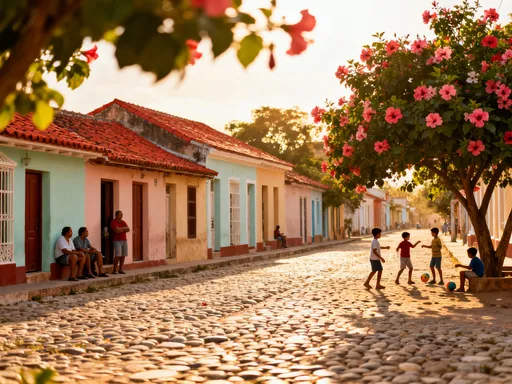
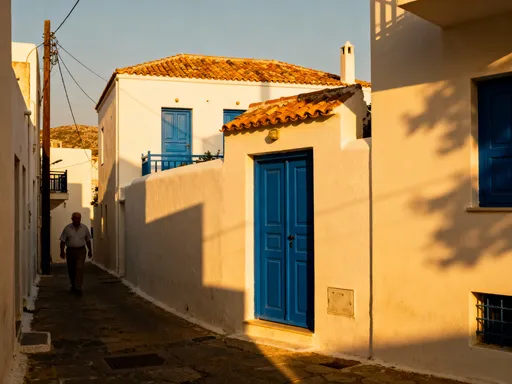
As visitors step off the bus or taxi at the edge of town, the transition from modern Cuba to colonial Trinidad feels almost cinematic. The first sight of pastel-hued buildings with red-tiled roofs and ornate ironwork grilles signals that something special lies ahead. Unlike Havana’s bustling energy or Santiago’s mountainous drama, Trinidad unfolds gently, revealing itself one cobblestone at a time. The absence of car traffic in the historic center adds to the calm—luggage may be heavy, but the rhythm of life here encourages slow steps and deeper breaths. The air carries a blend of tropical scents: hibiscus blooming in courtyard gardens, wood smoke from nearby kitchens, and the sweet tang of ripe plantains grilling over open flames.
What makes Trinidad’s arrival so memorable is not just its beauty, but its authenticity. There are no oversized resorts or glass-fronted shopping malls to disrupt the view. Instead, laundry flutters from upper balconies, children chase each other through side alleys, and elders sit in doorways fanning themselves under wide-brimmed hats. These are not scenes arranged for tourists—they are the daily rhythms of a community that has preserved its identity across generations. For many women traveling solo or with family, this sense of genuine life unfolding offers reassurance and connection. It’s easy to feel welcomed, even without speaking fluent Spanish. A smile, a nod, a shared glance at a passing horse-drawn cart—these small moments build bridges.
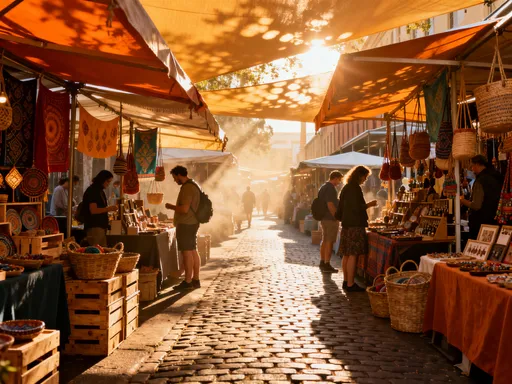
Navigating the center is simple, with narrow streets radiating outward from Plaza Mayor like spokes on a wheel. Signage is minimal, yet the layout feels intuitive, guided by the sound of music, the scent of food, or the sight of a crowd gathering near a church doorway. Comfortable walking shoes are essential, as the cobblestones can be uneven, especially after rain. But this slight physical challenge enhances the sense of discovery. Each turn reveals a new detail: a hand-painted door, a flowering bougainvillea spilling over a wall, a vendor selling guava pastries from a wooden tray. Trinidad does not rush its guests. It asks only that they pay attention—and in return, it offers a rare kind of presence, one that lingers long after departure.
The Heart of the City: Plaza Mayor as a Living Room
If Trinidad has a soul, it resides in Plaza Mayor. More than just a central square, this sun-drenched plaza functions as the town’s communal living room—a place where life unfolds openly, warmly, and without pretense. By mid-morning, families gather at outdoor cafés shaded by striped awnings, sipping strong Cuban coffee from tiny cups. Teenagers flirt near the cathedral steps, while older couples sit on stone benches, watching the world go by. As daylight fades, the atmosphere shifts. Musicians arrive with congas, trumpets, and maracas, setting up near the bandstand. Soon, the entire plaza pulses with rhythm. Locals and visitors alike are drawn to dance, their movements fluid and joyful, unselfconscious and inclusive.
The buildings surrounding Plaza Mayor frame this social theater like a carefully curated stage. The Cathedral de la Santísima Trinidad, with its pale yellow façade and twin bell towers, stands as a quiet witness to centuries of worship and community life. Across the way, the Museo Romántico—once a wealthy merchant’s home—invites exploration with its elegant staircase, antique furnishings, and intimate glimpse into 19th-century domesticity. Government offices occupy other corners, their wooden shutters thrown open to the breeze, reminding visitors that this is not a museum frozen in time, but a functioning town where history and modernity coexist.
For travelers, especially women who appreciate cultural depth and human connection, Plaza Mayor offers a rare opportunity to participate rather than observe. Sitting at a café table with a glass of freshly squeezed mango juice, one becomes part of the scene. A local grandmother might smile and offer a piece of advice in broken English. A child may hand over a handmade bracelet for sale, then giggle and run off. These interactions are not transactional; they are relational. Nearby eateries serve hearty Cuban staples like ropa vieja—shredded beef in tomato sauce—and crispy tostones, grounding the experience in flavor as much as in feeling. In Plaza Mayor, culture is not something you read about—it’s something you live.
Hidden Courtyards and Private Palacios: Glimpses Behind the Walls
Beyond the vibrant streets and public squares lie Trinidad’s most intimate treasures: the casonas, or colonial mansions, with their hidden courtyards and storied pasts. These grand homes, built during the sugar boom of the 18th and 19th centuries, were once the domains of wealthy plantation owners. Today, some operate as museums, while others remain private residences, their families continuing to live behind heavy wooden doors adorned with iron knockers. What lies within—lush gardens, tiled fountains, shaded patios—is often invisible from the street, revealing itself only to those who enter with respect and curiosity.
One of the most visited is Palacio Cantero, now the Museo Histórico Municipal. Stepping inside is like entering another world. The central courtyard, surrounded by arched colonnades, features a marble fountain and potted palms. Sunlight filters through wrought-iron railings, casting delicate shadows on the stone floor. Inside, exhibits trace Trinidad’s evolution from colonial outpost to cultural gem, with artifacts ranging from antique furniture to handwritten letters. But even more powerful are the homes that are not museums. A partially open gate may reveal a grandmother sweeping leaves from a tiled patio, or a family gathered around a radio playing boleros. These glimpses are fleeting, yet profoundly moving.
The architectural contrast between exterior and interior speaks volumes. Outside, the façades are modest—painted in soft pinks, blues, and yellows, with minimal ornamentation. But inside, the spaces burst with life and detail. This duality reflects a deeper cultural value: privacy and dignity. Many families welcome respectful visitors through guided tours or homestay arrangements, but they do so on their own terms. For travelers, especially women seeking meaningful engagement, these encounters require mindfulness. Photography should be discreet, voices kept low, and questions offered gently. Curiosity is welcome, but intrusion is not. To walk through a casona is to witness not just history, but ongoing life—a legacy preserved not for show, but for continuity.
Beyond the Center: Exploring Adjacent Neighborhoods
While the historic core of Trinidad draws the majority of visitors, the neighborhoods just beyond its edges offer a different kind of richness. Areas like San Luis and La Vigía are not listed in every guidebook, nor do they feature prominently on tourist maps. Yet they are where everyday Cuban life thrives—unpolished, resilient, and deeply authentic. Here, children play dominoes on overturned crates, musicians rehearse son cubano in open patios, and street vendors sell churros and coconut water from wooden carts. There are no souvenir stalls or English-language menus, but there is an abundance of humanity.
Walking through these neighborhoods, one quickly realizes that tourism, while present, is not the engine of daily life. Houses may be modest—painted cinderblock with corrugated metal roofs—but they are cared for, often decorated with potted plants or hand-painted signs. Women sit outside braiding their daughters’ hair, while men repair bicycles or mend fishing nets. The pace is unhurried, shaped more by necessity than by schedule. For female travelers, particularly those who value real connection over curated experiences, these areas offer a chance to see Cuba beyond the postcard image.
Visiting San Luis or La Vigía also supports the local economy in direct and meaningful ways. A few simple Spanish phrases—a friendly buenos días, a polite ¿cómo estás?—can open doors. A small purchase of homemade sweets or a shared laugh over a game of dominoes builds rapport. Some families offer informal tours or invite guests into their homes for a cup of coffee. These moments are not staged; they arise naturally from mutual respect. Transportation to these areas is simple—local shared taxis (known as colectivos) or short walks from the center. The key is to go with humility, to listen more than speak, and to recognize that authenticity cannot be demanded, only received as a gift.
Nature and History Intertwined: The Valley de los Ingenios
Just a short ride from Trinidad lies a landscape where nature and history converge in powerful ways—the Valley de los Ingenios. Designated as a UNESCO World Heritage Site alongside the town, this fertile valley was once the heart of Cuba’s sugar empire. Today, it is a place of quiet beauty and deep reflection. Rolling hills covered in sugarcane stretch toward the horizon, dotted with the ruins of sugar mills, slave quarters, and colonial estates. The air is thick with the scent of earth and vegetation, and the only sounds are birdsong and the occasional clip-clop of a mule-drawn cart.
The most iconic landmark in the valley is the Manaca Iznaga Tower, a 45-meter stone watchtower built in the 1800s by a powerful sugar baron. From its spiral staircase, visitors can climb to the top and gaze across the entire region—an unforgettable panorama that speaks to both the grandeur and the brutality of the past. Enslaved Africans once labored in the fields below, their lives controlled from this very vantage point. Today, guided tours offer historical context with sensitivity, acknowledging the suffering embedded in this landscape while honoring the resilience of those who survived it.
Exploring the valley goes beyond history—it is also an ecological journey. Efforts to preserve the area include reforestation projects, sustainable agriculture, and community-led conservation. Visitors can hike along shaded trails, spot native birds like the Cuban trogon (the national bird), or take a slow ride through the cane fields in a traditional ox cart. These experiences are not adrenaline-fueled adventures, but meditative walks through memory and growth. For women who appreciate travel that nourishes both mind and spirit, the Valley de los Ingenios offers a rare depth—a place where beauty and sorrow coexist, and where the land itself tells a story that must be heard.
Rhythm of the Island: Music, Dance, and Local Celebration
In Trinidad, music is not entertainment—it is the heartbeat of daily life. It spills from open windows, echoes down alleyways, and rises from patios where families gather after dinner. There are no strict schedules, no ticketed performances—just the spontaneous eruption of sound. A few men might begin tapping congas, someone pulls out a tres guitar, and within minutes, a full ensemble forms. This is son cubano, the root of salsa, born from African rhythms and Spanish melodies. It is not played for tourists, though tourists are always welcome to join.
One of the most accessible places to experience this is Casa de la Música, a modest open-air venue just off Plaza Mayor. Unlike staged shows in larger cities, the performances here feel intimate and inclusive. Locals of all ages dance together—grandparents, teenagers, toddlers—moving with a natural grace that comes from lifelong practice. Visitors are not spectators; they are participants. No one cares if your steps are clumsy. What matters is that you try, that you let the rhythm move you. For many women, especially those who may have set aside dancing in the busyness of daily life, this is a joyful rediscovery—a reminder that joy does not require perfection.
Weekend peñas—informal music gatherings—happen in private homes and community spaces, often lasting late into the night. These events are not advertised, but word spreads quickly. To be invited is a sign of acceptance. Even if you don’t speak Spanish, the music bridges the gap. Dance becomes a language of its own—a way to connect, to release, to celebrate. In a world that often feels fragmented, Trinidad’s musical culture offers unity. It is not about performance, but presence. It is not about skill, but spirit. And in that, it becomes something sacred.
Sustaining the Magic: Responsible Tourism in a Fragile Treasure
Trinidad’s charm is undeniable, but it is also fragile. As visitor numbers rise, so do the pressures on infrastructure, housing, and cultural integrity. The very qualities that draw people—authenticity, intimacy, slowness—are at risk of being diluted or commodified. Souvenir shops multiply, some homestays prioritize profit over connection, and certain neighborhoods begin to feel performative rather than lived-in. For thoughtful travelers, especially women who care about ethical choices, the question becomes not just where to go, but how to go.
The answer lies in responsible tourism—travel that gives back rather than takes. Choosing family-run casas particulares over commercial hotels ensures income stays within the community. Buying handmade crafts directly from artisans supports local creativity. Opting for eco-conscious tours, such as horseback rides led by local guides or visits to organic farms, promotes sustainable practices. Even small actions matter: avoiding loud behavior in residential areas, refraining from flash photography in homes, and learning a few basic Spanish phrases show respect and build trust.
Community-led initiatives are emerging to protect Trinidad’s soul. Some neighborhoods have formed cooperatives to manage tourism sustainably, offering guided walks, cooking classes, and music workshops that benefit residents directly. These programs ensure that culture is shared, not sold. For visitors, participating in them is not just educational—it is an act of solidarity. Trinidad does not need to be preserved as a museum piece, frozen in time. It needs to thrive as a living community, where tradition and progress walk hand in hand. The goal is not to keep the town exactly as it is, but to honor its essence while allowing it to evolve with dignity.
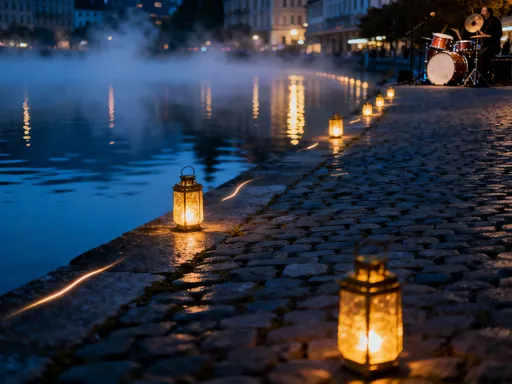
As the sun sets over Trinidad, casting golden light on the cobblestones, the music begins again—soft at first, then growing stronger. Children run through the plaza, elders sway in their chairs, and strangers become friends on the dance floor. This is not a performance for guests. This is life. And for those who travel with intention, who seek connection over convenience, who believe that the world is made richer by its differences—Trinidad offers a gift. It reminds us that beauty lives in simplicity, that history breathes in the present, and that the most meaningful journeys are not measured in miles, but in moments that change us. To visit Trinidad is not just to see another place—it is to remember who we are.