Whispers of Stone and Soul: A Private Journey Through Siem Reap’s Living Art
Have you ever felt history breathe? In Siem Reap, Cambodia, ancient temples aren’t just ruins—they’re living canvases. This isn’t a tourist checklist trip. It’s a quiet conversation with carvings that tell stories older than nations. I wandered not with crowds, but with curiosity, discovering how art here isn’t displayed—it lives. From dawn-lit bas-reliefs to silk weavers’ hands moving like memory, this is culture felt, not just seen. The stones speak in hushed tones, and those who walk slowly, listen.
Beyond Angkor Wat: Seeing Siem Reap with Fresh Eyes
Siem Reap is often reduced to a single name: Angkor Wat. Millions arrive each year chasing sunrise silhouettes against five lotus towers, cameras poised, schedules tight. But beyond the temple’s grand causeway lies a city pulsing with a quieter, deeper rhythm—one that unfolds not in postcards, but in alleyways where monks collect alms at dawn, where the scent of frangipani drifts through open courtyards, and where murals bloom on forgotten walls like secrets whispered in color. To truly know Siem Reap is to step off the pilgrimage path and into the breath of daily life.
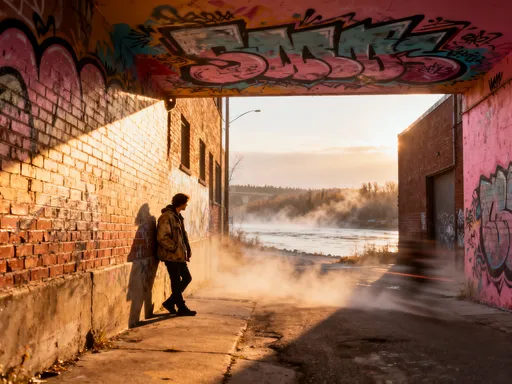
The city itself is a layered work of art. Colonial-era shophouses stand beside modern cafés where young Cambodians sketch in notebooks, inspired by both tradition and global currents. Street art, once informal, has matured into a recognized form of expression, with local collectives painting scenes of rural life, mythological beings, and environmental messages on blank urban walls. These are not tourist distractions; they are acts of cultural reclamation, where youth reinterpret heritage through spray paint and stencils. Galleries like Theam’s House and Sombai Gallery offer curated glimpses into this evolving scene, blending ancestral themes with contemporary mediums.
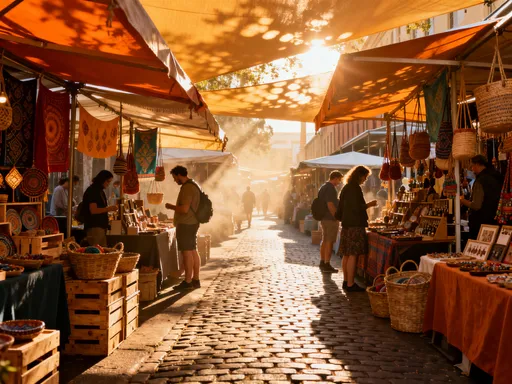
Meanwhile, the morning market hums with a different kind of creativity. Vendors arrange baskets of banana blossoms, fermented fish paste, and turmeric roots in patterns shaped by generations of instinct. An elderly woman folds banana leaves into perfect cups for sticky rice—each fold a gesture repeated since childhood. This is where culture lives not in preservation, but in practice. While tourists queue for temple entry, locals begin their day with rituals unseen: lighting incense at home altars, sharing rice porridge with neighbors, cycling past lotus ponds where dragonflies hover like painted jewels.
The contrast between mass tourism and intimate authenticity is not a judgment, but an invitation. It asks the traveler to consider: What do we seek when we journey? Is it the photograph, or the feeling? Siem Reap offers both, but only one lingers. By shifting focus from the monumental to the momentary—the way sunlight hits a weathered door, the sound of a child laughing behind a jasmine vine—we begin to see not a destination, but a living community where art is not confined to galleries, but woven into the fabric of existence.
Dawn at Ta Prohm: When Jungle and Art Embrace
If Angkor Wat is the crown of the Khmer Empire, Ta Prohm is its wild heart. Built in the late 12th century as a university and monastery, this temple was deliberately abandoned to the jungle for centuries, allowing nature to reclaim its stones in a slow, poetic embrace. Today, it stands as one of the most emotionally resonant sites in Southeast Asia—not because of symmetry or scale, but because of the way life and ruin intertwine. Here, art does not resist time; it collaborates with it.
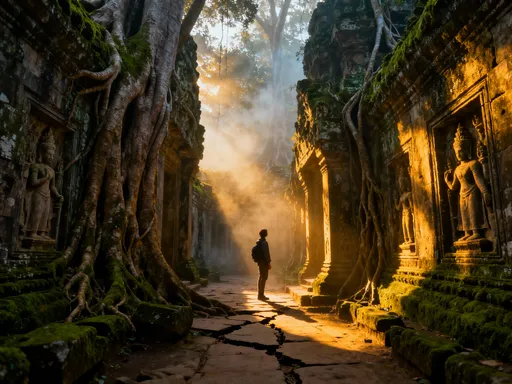
Arriving at first light, the air is cool and thick with mist. The usual crowds have not yet arrived, and the only sounds are the rustle of leaves and the distant call of a hornbill. As sunlight filters through the canopy, it catches the edges of sandstone blocks, illuminating carvings half-swallowed by roots. Gigantic silk-cotton trees rise from the courtyard, their serpentine roots wrapping around doorframes, threading through corridors, holding entire walls in a botanical embrace. It feels less like visiting a ruin and more like stumbling upon a sacred truce between stone and forest.
The bas-reliefs at Ta Prohm are softer, more intimate than those at other temples. Apsaras—celestial dancers—are carved with delicate features, their hands raised in blessing or dance. Some are nearly obscured by moss, their expressions softened by centuries of humidity and shadow. To walk here is to witness art in conversation with entropy. The Khmer builders did not fear decay; they anticipated it. The temple was designed not as a permanent monument, but as a vessel for transformation.
Historically, Ta Prohm was dedicated to the mother of King Jayavarman VII, a ruler known for his compassion and extensive public works. Over 12,000 people once served the temple, including dancers, scholars, and healers. Though the institution faded, its spirit endures in the quiet reverence of those who walk its paths. Unlike more restored sites, Ta Prohm retains an aura of mystery. There are no ropes or signs dictating where to stand. Visitors may pause beneath a root-wrapped lintel, touch a weathered carving, or sit in silence where monks once meditated. It is one of the few places in the Angkor Archaeological Park where the past feels not reconstructed, but present.
The Carved Stories of Angkor Thom: Faces That Watch Over Time
Just a short walk from Ta Prohm lies Angkor Thom, the last great capital of the Khmer Empire. At its center stands the Bayon Temple, a surreal and majestic structure adorned with over 200 stone faces gazing serenely in all directions. These faces, believed to represent either the bodhisattva Avalokiteshvara or King Jayavarman VII himself, watch silently over the ruins, their faint smiles unchanging through centuries of sun, storm, and silence. To stand beneath them is to feel observed not by gods, but by time itself.
The Bayon is more than an architectural marvel; it is a stone library. Its outer gallery walls are covered in bas-reliefs depicting scenes from daily life, religious ceremonies, and historical battles. Unlike the mythological themes common in other temples, these carvings include fishermen hauling nets, soldiers marching with spears, and market vendors selling fruit—scenes so vivid they feel like frozen moments from a 12th-century chronicle. One panel shows a naval battle on the Tonlé Sap, with war boats clashing amid waves of chiseled water. Another captures a surgeon performing what appears to be acupuncture, suggesting advanced medical knowledge.
These reliefs served multiple purposes. For the literate elite, they conveyed religious teachings and royal propaganda. For the general population, they were visual sermons—stories carved where all could see. The Khmer understood that art could educate, inspire, and unify. The bas-reliefs at Angkor Thom are not decorative; they are narrative. Walking the gallery is like reading an epic poem etched in sandstone, where every figure, gesture, and garment carries meaning.
The inner levels of the Bayon grow quieter, more meditative. Fewer tourists climb to the upper terraces, where the giant faces loom closer, their eyes seeming to follow movement. Here, the carvings shift from historical scenes to celestial beings—devatas, dvarapalas, and dancing apsaras—each with distinct headdresses and expressions. The craftsmanship is extraordinary: hair braided in stone, sashes flowing as if caught in wind. This is where art ascends from storytelling to transcendence. The temple was not merely a place of worship; it was a bridge between the human and the divine, built not with steel and glass, but with patience, faith, and chisel.
Off the Beaten Path: Hidden Galleries and Local Craft Studios
While the temples command awe, Siem Reap’s living culture thrives in its workshops and studios, where traditional crafts are not museum pieces, but livelihoods. A short tuk-tuk ride from Pub Street leads to Artisans Angkor, a social enterprise that trains and employs local artisans in silk weaving, stone carving, and lacquerware. Unlike souvenir shops selling mass-produced trinkets, this is a place where craft is practiced with intention, where every thread and chisel mark honors ancestral knowledge.
In the silk workshop, women sit at wooden looms, their hands moving in rhythmic precision. The process begins with mulberry farming—silkworms feed on the leaves, spinning cocoons that are then boiled, unwound, and dyed with natural pigments. The colors are deep and earthy: indigo from clitoria flowers, crimson from lac insects, saffron from turmeric. Weaving a single scarf can take days, each pattern drawn from ancient temple motifs or village folklore. Visitors are welcome to observe, not as spectators, but as witnesses to a living tradition.
Other studios specialize in stone carving, where apprentices learn to replicate the delicate apsara figures seen at Angkor. The work is slow, requiring years to master. A master carver might spend weeks on a single statue, chiseling details so fine they seem to breathe. These pieces are not replicas for export; many are used in temple restoration projects, ensuring that new generations of art grow from the same roots as the old.
Community galleries like Phare, the Cambodian Circus, blend visual art with performance, telling stories of war, resilience, and hope through acrobatics and painting. Their social mission is clear: to transform trauma into beauty, and poverty into opportunity. By supporting these spaces—through visits, purchases, or donations—travelers do more than collect souvenirs; they become part of a cultural continuity that might otherwise fade. In a world of fast fashion and disposable culture, these studios stand as quiet acts of resistance, preserving not just techniques, but dignity.
The Rhythm of Performance: Witnessing Apsara Dance Up Close
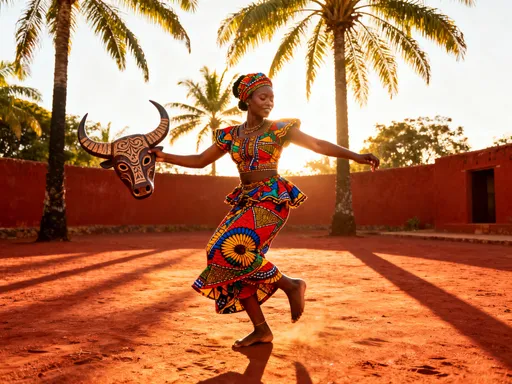
One evening, beneath a thatched pavilion lit by oil lamps, I watched an Apsara dance performance that lasted less than an hour but imprinted itself on memory. There were no spotlights, no amplified music—just five dancers in gold-trimmed silk, their fingers arched like lotus buds, their eyes following precise trajectories in the air. The music was live: a xylophone, a double-reed sralai, a drum. The movements were slow, deliberate, each gesture a syllable in a language older than speech.
Apsara dance traces its origins to celestial beings in Hindu and Buddhist mythology—divine dancers who entertained gods in heavenly courts. Over centuries, the art was refined in royal courts, where it served both religious and ceremonial functions. The hand positions—known as kbach—are codified, each representing a flower, a bird, or a spiritual concept. A flick of the wrist might symbolize a butterfly; a raised palm, enlightenment. To perform Apsara is not to entertain, but to invoke.
What struck me most was the stillness beneath the motion. The dancers’ faces remained serene, almost detached, as if their bodies were instruments channeled by something greater. Unlike Western dance, which often emphasizes emotion and expression, Apsara is about precision, control, and spiritual offering. The performance I saw was held at a small cultural center, not a hotel ballroom. The audience sat on floor cushions, close enough to see the dust on the dancers’ slippers, the slight tremble in a held pose.
This intimacy transformed the experience. There was no barrier between performer and viewer, no sense of spectacle. It felt like a ritual, not a show. In larger venues, Apsara is often shortened, simplified, or set to electronic music to cater to tourist attention spans. But in these quiet spaces, the dance retains its soul. For those who seek depth, attending such a performance is not optional—it is essential. It is a reminder that culture is not something to be consumed, but to be received with humility.
Food as Cultural Expression: Flavors That Tell a Story
In Siem Reap, every meal is a conversation with history. Cambodian cuisine, long overshadowed by its Thai and Vietnamese neighbors, is a quiet masterpiece of balance—between sweet and bitter, hot and cool, fermented and fresh. Dishes like amok—a creamy fish curry steamed in banana leaves—and prahok k’ti—a pungent stew made with fermented fish—carry flavors shaped by geography, climate, and survival.
At a family-run eatery near the river, I shared a meal with a local guide who explained how prahok, the fermented fish paste used in so many dishes, was born from necessity. In a land of monsoon floods and dry seasons, preserving protein was essential. Fish caught in the Tonlé Sap were salted and stored in jars, where they aged for months, developing a deep umami flavor. Today, prahok is both a staple and a symbol—a taste of resilience passed down through generations.
Other dishes reveal layers of cultural exchange. Num banh chok, a morning noodle soup topped with green curry and fresh herbs, shows Indian influence in its spicing. Chha trokuon, stir-fried morning glory with garlic and chili, reflects Chinese techniques adapted to local ingredients. Even the humble banana blossom, often shredded into salads, has medicinal roots in traditional Khmer healing.
Meals in Siem Reap are not rushed. They are social, seasonal, and sacred. During Pchum Ben, the festival for ancestors, families prepare elaborate dishes to honor the dead. During Khmer New Year, homes are filled with sweets made from coconut and palm sugar. To eat here is to participate in a rhythm older than tourism. And when you sit at a plastic table on a sidewalk, sharing food with strangers, you realize that culture is not only in temples and galleries—it is in the act of breaking bread, of passing a plate, of saying “chum reap sor” with a full stomach and an open heart.
Traveling with Depth: How to Engage, Not Just Observe
Siem Reap teaches a different kind of travel—one that values presence over possession. The temples may be free to enter, but true access requires something more: patience, respect, and a willingness to listen. The most meaningful experiences here are not found in guidebooks, but in moments of quiet connection—watching a monk tie his robe at dawn, sharing a smile with a silk weaver, sitting in silence beneath a thousand-year-old carving.
To engage deeply, begin by slowing down. Visit Angkor Wat at mid-morning, when the crowds thin and the light slants across the moat like liquid gold. Hire a local guide—many are former monks or historians who can explain not just what you’re seeing, but why it matters. Choose small-group tours that limit environmental impact and support community-based tourism initiatives. Avoid climbing on fragile structures or touching carvings; oils from skin accelerate erosion.
Photography should be practiced with care. Always ask permission before photographing people, especially monks, children, and artisans. Some may smile and gesture yes; others may shake their head gently. Respect that. The goal is not to capture an image, but to honor a moment. And when you do take a photo, consider what it represents: Is it a memory, or a trophy?
Support ethical businesses. Buy crafts directly from workshops like Artisans Angkor or smaller cooperatives. Dine at family-run restaurants instead of international chains. Your choices have ripple effects. Tourism is Siem Reap’s lifeblood, but it can either sustain or erode culture. By traveling mindfully, you become part of the solution.
Finally, allow space for silence. Sit on a stone bench at Preah Khan and close your eyes. Listen to the wind in the trees, the distant call of a guide, the soft crunch of footsteps on gravel. In that stillness, the temples speak. Not in words, but in feeling. That is where true understanding begins.
Carrying the Silence Home
When I left Siem Reap, I carried no carved elephants or silk scarves. What I brought back was quieter: a sense of stillness, a memory of faces in stone, the echo of a dancer’s hand moving through air. The art of Siem Reap does not reside only in its temples or galleries; it lives in the way it changes you. It asks not to be admired, but to be felt.
In a world of noise and speed, Siem Reap offers a different rhythm—one of patience, reverence, and continuity. Its greatest masterpiece is not Angkor Wat, nor the Bayon, nor any single sculpture. It is the invisible thread that connects past and present, artist and observer, hand and stone. To walk this city is to remember that culture is not a relic, but a river—always moving, always fed by those who care to listen.
And perhaps that is the most important lesson of all: that true travel does not begin when we arrive, but when we pause. When we stop seeing and start being. In the whispers of stone and soul, we find not just history, but ourselves.